Wood Floor Refinishing and Repair in Alhambra

We look under the boards before we quote, sand only what can take it, and finish with products legal to apply in the South Coast air district.

Alhambra Wood Flooring has spent 20+ years refinishing, repairing and installing wood floors in Alhambra, CA. We sand and recoat worn hardwood, repair boards damaged by water, pets and termites, rebuild weak subfloors, and build hardwood stair treads. We also install solid, engineered and wide plank floors, and we handle commercial wood flooring for shops and offices.

Most floor problems start somewhere a sander cannot reach. A bouncy hallway can be a cracked joist, a cupped living room can be a moisture problem under the house, and a line of small holes can be drywood termites rather than old nail holes. We find the cause first, so the money you spend on the surface is not wasted.

Every estimate is written, measured and itemized. You see which rooms need a full sand and which only need a recoat, what stair work costs on its own, and which finish goes down. You also get a schedule showing when each room is off limits and when furniture, rugs and pets can come back.

Get Your Free Quote

Fast response • No obligation

So we can reach you about your request.

So we can send you a confirmation after you submit this inquiry form.

  • 20+ Years in Wood Flooring
  • Free Written Estimates
  • Room-by-Room Schedules

What we do

Our Services

Wood floor refinishing, repair and installation in Alhambra, CA

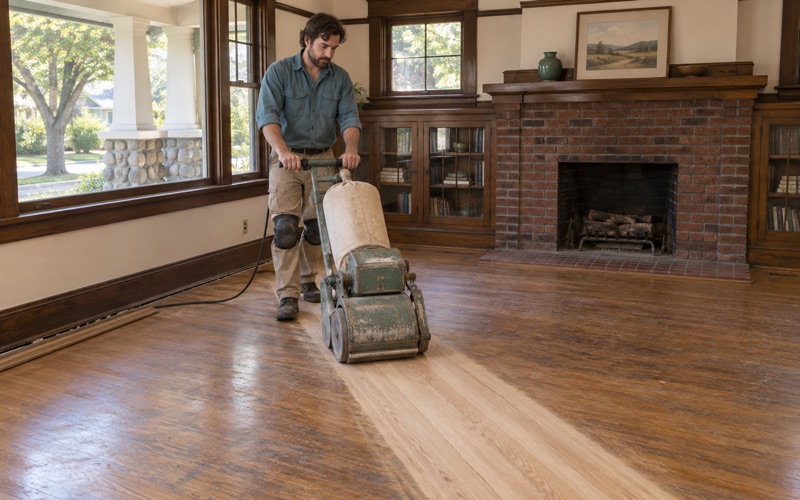
Worker running a drum sander along red oak strip flooring in an Alhambra Craftsman bungalow, a pale band of bare wood opening up behind the machine.

Wood Floor Refinishing

Full sanding, stain and finish for worn hardwood, planned around cure times, lead-safe rules and the rooms you still need to use.

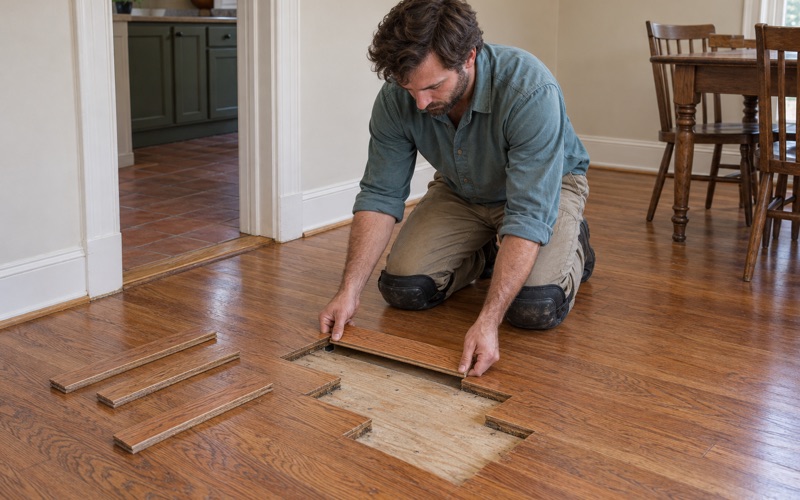
Worker lowering a matched replacement board into a staggered opening in an existing oak floor in Alhambra, woven in so no straight seam shows.

Hardwood Floor Repair

Board replacement, stain removal, gap and squeak fixes, and termite-damage repair woven into the floor you already have.

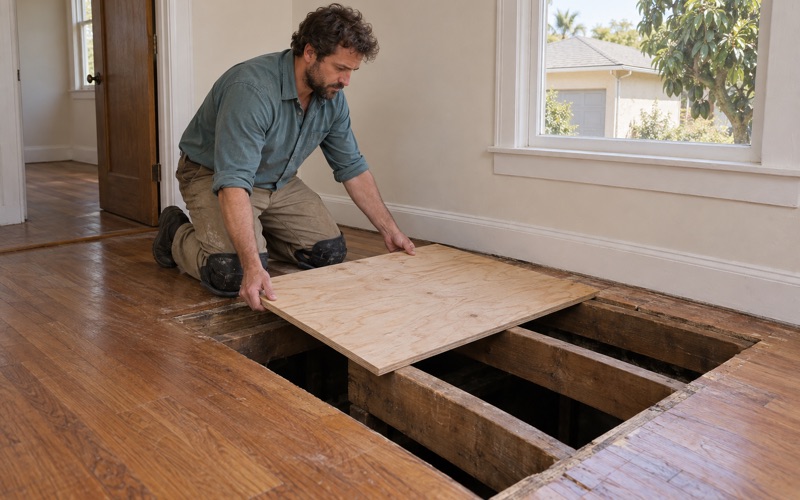
Worker lowering a new plywood subfloor panel onto exposed joists after rotted subfloor was cut out beneath an Alhambra oak floor.

Subfloor Repair

Crawl space inspection, joist sistering and subfloor replacement for floors that sag, bounce, slope or feel soft underfoot.

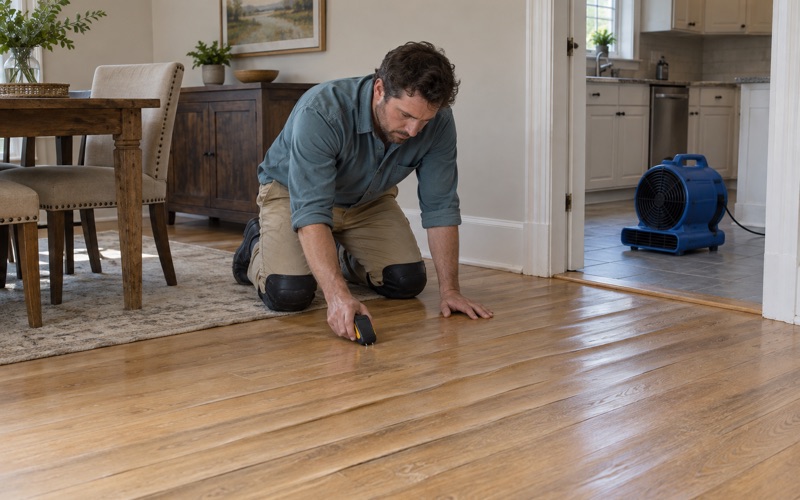
Worker checking cupped oak boards with a moisture meter beside a kitchen doorway in Alhambra where a leaking supply line soaked the floor.

Water Damaged Hardwood Floor Repair

Moisture mapping, drying checks and matched board and finish repair for hardwood floors hit by leaks, floods and burst lines.

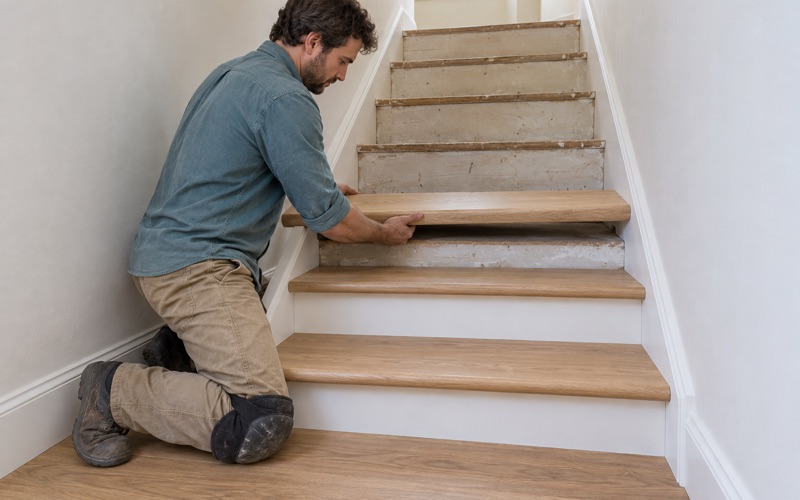
Worker setting a bullnosed white oak retro tread onto a stair in an Alhambra two-story house, finished treads fitted below it.

Hardwood Stair Treads

New and retrofit hardwood treads, risers, nosings and landings, priced per step and stained to match the floors they connect.

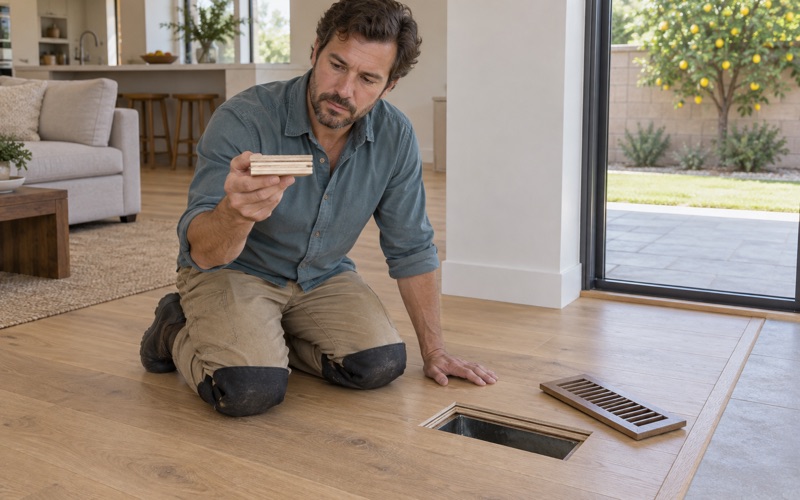
Worker holding an engineered oak offcut beside a lifted floor register in an Alhambra home to show how thin the wear layer is before a sanding is promised.

Engineered Hardwood Refinishing

Wear layer measured first, then a full sand, a screen and recoat, or an honest answer that the veneer cannot take another sanding.

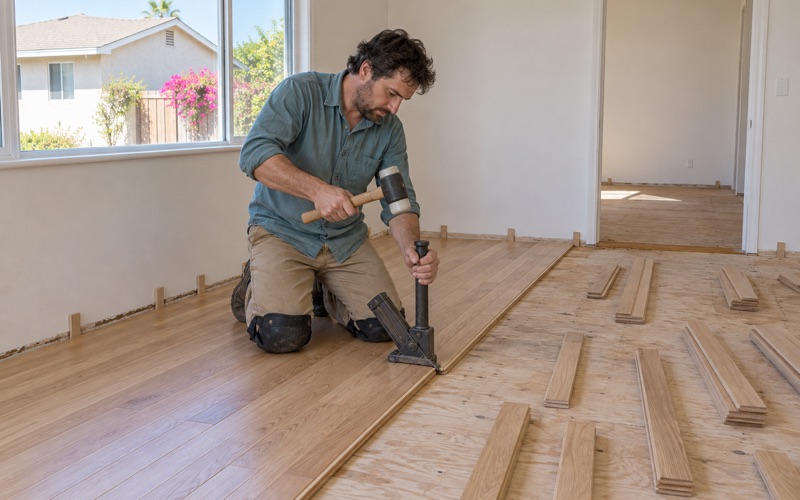
Worker driving a flooring nailer along the tongue of a solid oak board over a plywood subfloor in an Alhambra house.

Hardwood Floor Installation

Solid and engineered hardwood installed nail-down, glue-down or floating, after the subfloor, moisture and association rules are checked.

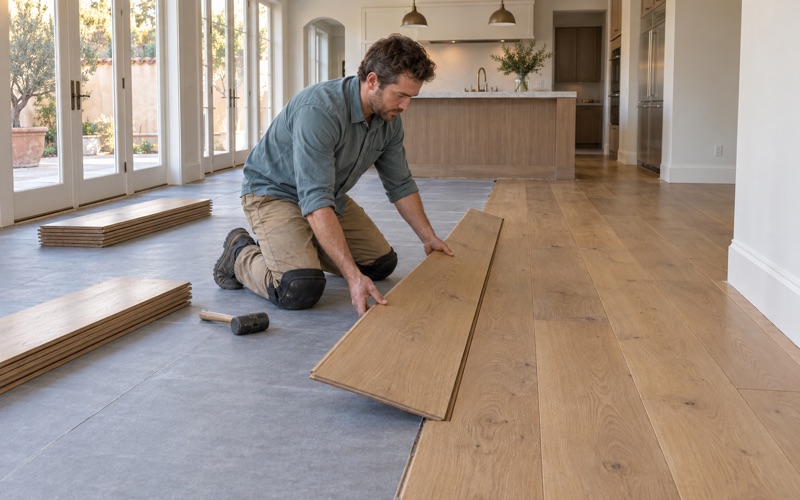
Worker lowering a long wide-plank white oak board into an open-plan room in Alhambra, its far end resting on the floor.

Wide Plank Flooring

Solid and engineered wide plank floors, chosen for how wide boards move and installed over a subfloor prepared to keep them flat.

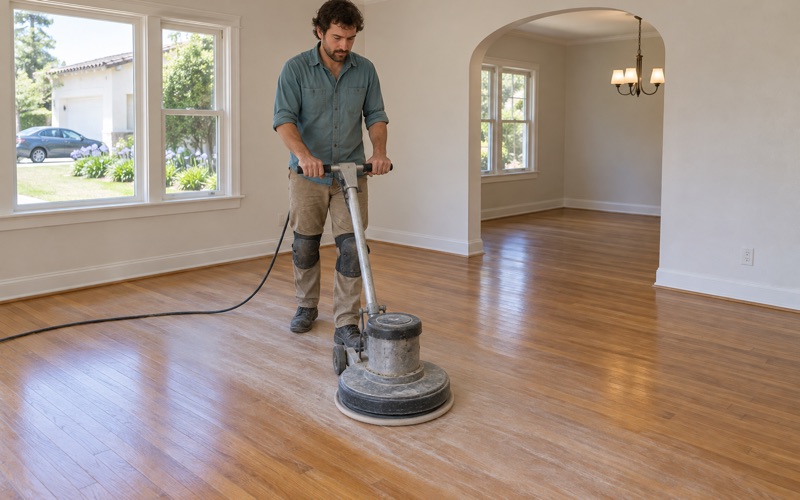
Worker running a floor buffer with a screening pad over an oak floor in an Alhambra home to prepare it for a fresh coat of finish.

Hardwood Floor Recoating

Screen and recoat for dull, lightly scratched hardwood, tested for wax and adhesion first, and done in a fraction of a full refinish's time.

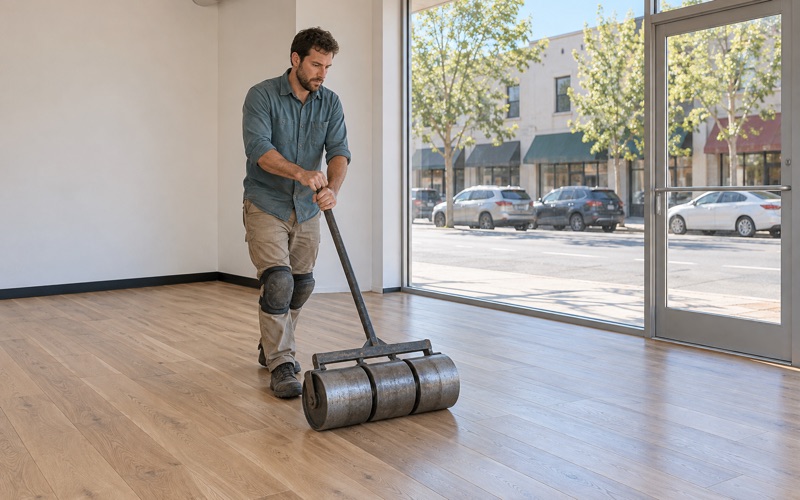
Worker rolling glue-down engineered oak flooring with a weighted floor roller in an empty storefront on an Alhambra commercial street.

Commercial Wood Flooring

Wood floor installation, refinishing and maintenance recoats for shops, offices, studios and restaurants, scheduled around opening hours.

Twenty Years On Local Wood Floors

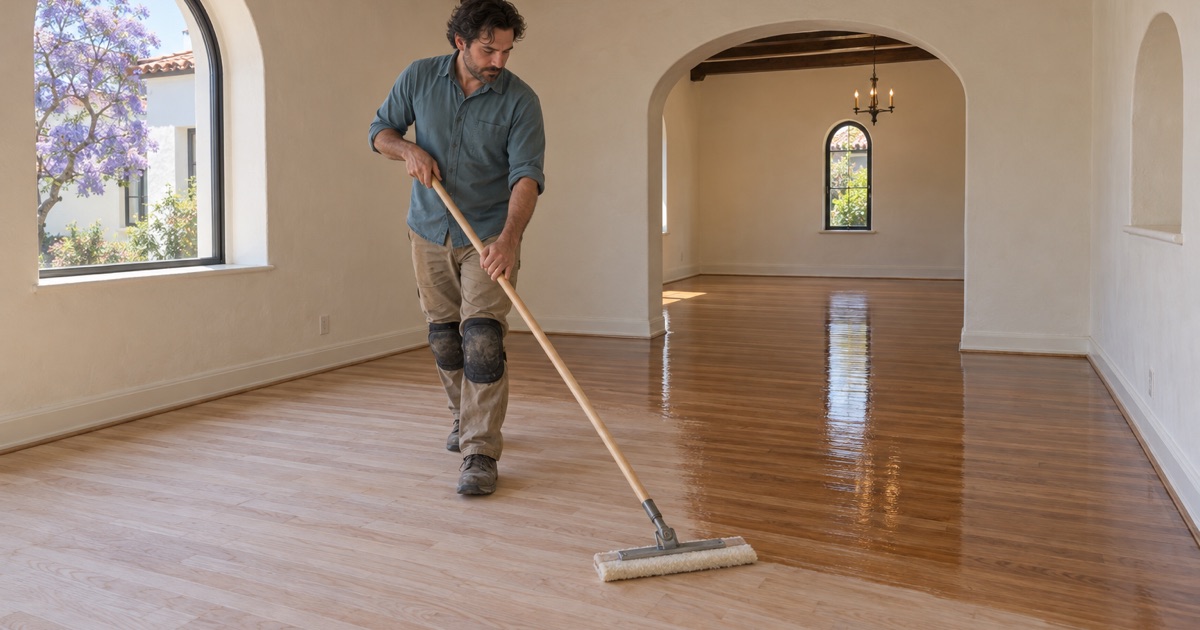
Worker drawing a finish applicator backwards across freshly sanded red oak in a Spanish Colonial Revival living room in Alhambra, an arched plaster opening behind him.

20+ Years in Wood Flooring

We have worked on wood floors for more than twenty years, long enough to have seen most of the ways an older floor fails and most of the ways a quick repair fails after it. That experience shows up in the questions we ask before we quote and in the parts of the job we refuse to skip.

Why Choose Alhambra Wood Flooring

Underfloor Check First

Every raised floor gets a look from the crawl space before we price a sanding, because a sagging or bouncy wood floor is often a joist, pier post or subfloor problem. Checking there first means the structure gets fixed before the surface, so a new finish does not go down over a floor that keeps moving, rather than hiding the defect under a fresh coat.

Build Year Before Sanding

No sanding date is set until we have confirmed when the house was built. Much of Alhambra’s housing predates 1980, and paint and finish layers in pre-1978 homes fall under the federal lead-safe renovation rule, so containment and cleanup are planned from the start rather than improvised after the dust is already in the air.

Our finish list comes from products legal to apply in the South Coast air district, where the wood coatings limit is 275 grams per liter. Choosing from that list up front means the finish we show you is the finish we can actually put down in Alhambra, rather than a national catalog product a contractor has to swap out mid-job.

Termites Ruled Out

Small round holes and piles of tiny pellets are identified as drywood termite evidence or ruled out before any board comes up. That way a replacement board is never nailed down over an active colony, rather than being replaced and quietly eaten again a few seasons later.

Stairs Priced By Step

Stair work is quoted by the tread, riser and nosing, never folded into a square-foot floor price. Stairs are sanded and built by hand, so pricing them separately keeps the estimate honest and keeps the open floor from subsidizing a staircase, rather than leaving a surprise charge for the steps at the end.

Schedules You Can Plan Around

Each job comes with a written room-by-room schedule showing when furniture, rugs and pets can return. A household can keep living in part of the house and a landlord can tell a tenant a real date, rather than guessing at cure times and scuffing a finish that was not ready.

When The Floor Has Started To Go Wrong

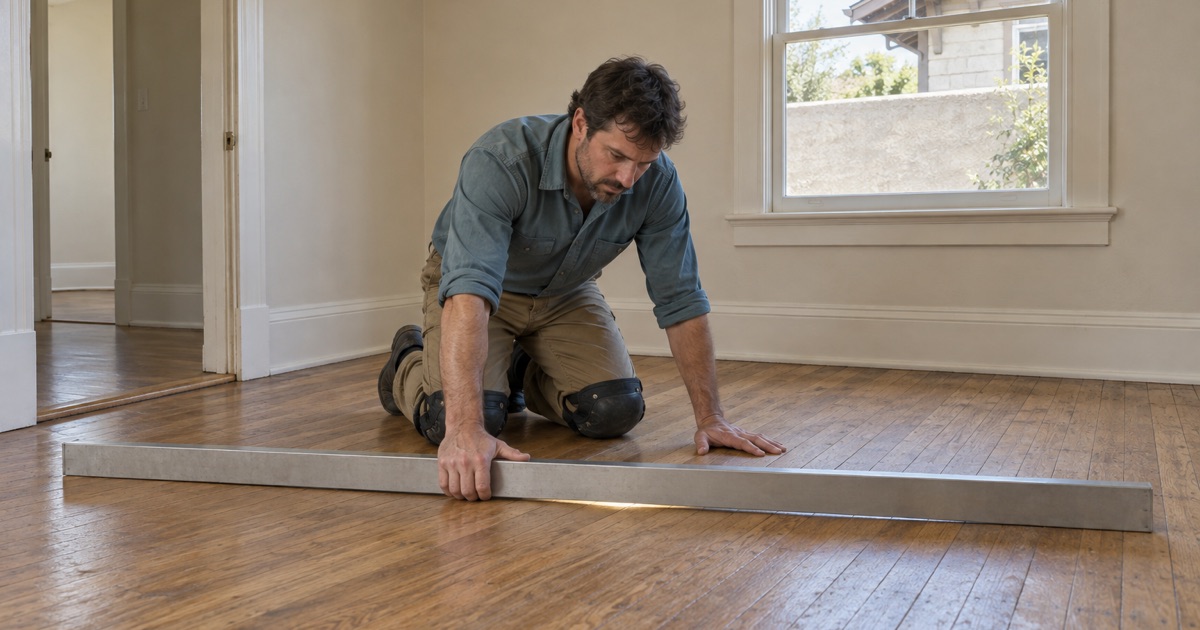
Worker laying a long straightedge across a sagging oak floor in an older Alhambra bungalow, daylight showing beneath the middle of the bar.

Sloping, Sagging Or Bouncy Wood Floors

A floor that slopes toward one wall, sags in the middle of a room or bounces underfoot is usually telling you about the framing rather than the boards. On a raised foundation we go into the crawl space and look at the girders, pier posts, floor joists and the subfloor itself. If a joist is cracked or undersized we sister it, and if a post has settled we address it, before any sanding is scheduled, so the new finish sits on a floor that has stopped moving.

Cupped And Crowned Hardwood Boards

Cupping is when board edges rise above their centers, and it almost always means more moisture below the floor than above it. Crowning is the reverse, often the result of sanding a floor flat while it was still cupped. We take moisture readings across the room and underneath before deciding anything, because sanding a cupped floor before it dries out is how a room ends up crowned a few months later.

Drywood Termite Holes Versus Old Nail Holes

Drywood termites leave small round kick-out holes and push out piles of tiny, hard pellets called frass, which collect on the floor or in corners. Old face-nail holes are usually in a regular line along board edges and have no pellets near them. When we see termite evidence we stop and recommend an inspection before any repair, so treatment happens first and new wood is not added to an active problem.

Pet, Plant Pot And Appliance Stains In Hardwood

Gray stains usually sit in the finish and upper wood and can sometimes be sanded out. Black stains from pet urine, a leaking plant pot or a slow drip under an appliance have usually soaked deep into the fibers and will not sand away. We test a stain before quoting, then either sand it out or replace the affected boards with a weave-in repair so the patch blends into the floor.

Water-Damaged Hardwood After A Supply Line Burst

The first two days after a supply line bursts decide how much of the floor can be saved. Standing water needs to come up, wet rugs and furniture need to come off the floor, and the room needs drying, with the crawl space checked too on a raised house. We document the loss with photos and moisture readings, then monitor the boards as they dry before deciding what can stay and what has to be replaced.

Soot, Ash And Smoke Odor On Wood Floors

After a nearby fire, fine soot and ash residue settle into the finish and the gaps between boards, and smoke odor can linger in the wood. Wiping the surface often smears soot deeper. We clean carefully, assess whether the finish has been damaged, and where needed sand the floor and apply odor sealing before refinishing, with the whole process documented for your insurance adjuster.

Squeaks, Popping And Hollow Spots

Most squeaks come from boards rubbing against each other or against loose fasteners, and they are annoying rather than dangerous. A soft spot that gives underfoot, or a hollow sound over a wide area, can point to a failed subfloor panel, a gap under a glue-down floor or a problem with the framing. We check from above and below to tell which kind you have before recommending a fix.

Peeling, Cloudy Or Worn-Through Floor Finish

Finish peeling usually means a new coat was applied over wax, oil soap or contamination it could not bond to. White haze can be trapped moisture or a product problem, and a worn-through finish in the traffic lanes leaves bare wood open to stains. We identify the cause first, because recoating over a contaminated floor simply peels again.

Sanding And Refinishing, And Living Through It

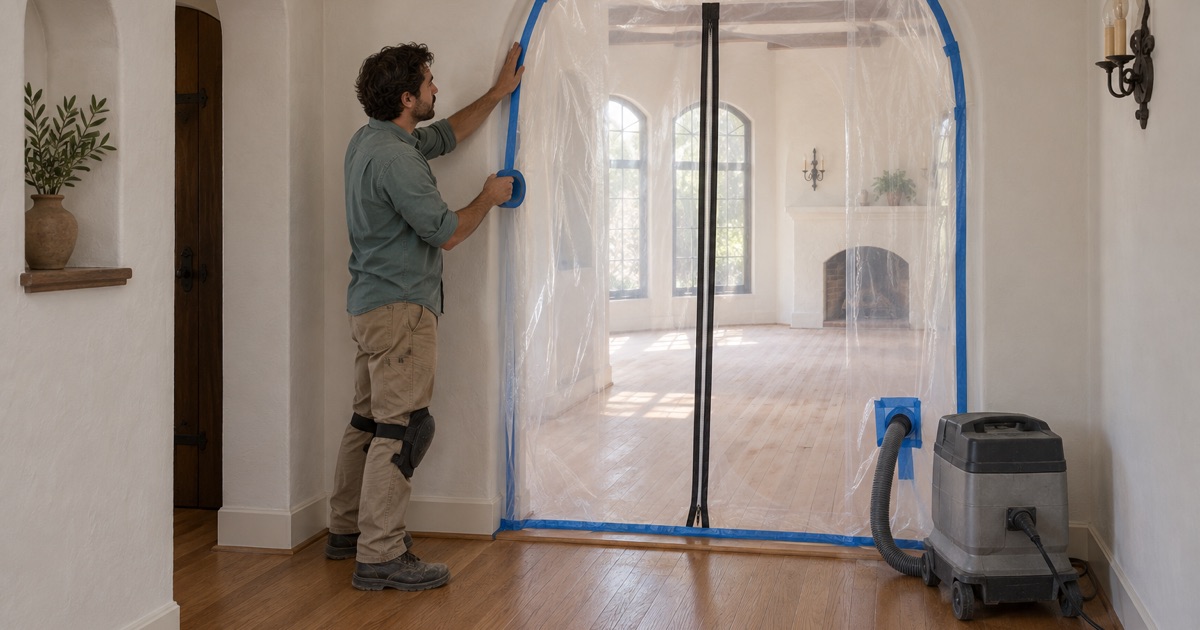
Worker taping a zippered plastic dust wall across a hallway arch while the rest of an Alhambra home stays lived-in behind it.

Recoat Or Full Sand: Reading The Wood Floor

If the wear is only in the finish, with no gray bare wood and no deep scratches, a screen and recoat can restore the floor for a fraction of the disruption. Once the finish has worn through, or dents and stains reach into the wood, the floor needs a full sand. We test for old wax or polish before recommending a recoat, since a new coat will not bond over it.

The Abrasive Grit Sequence On A Hardwood Sanding

A full sand moves from a coarse grit that flattens the floor through progressively finer grits that remove the scratches the previous paper left. Skipping a grit to save time leaves visible scratch patterns, and poor sander control leaves chatter marks, drum marks or edger swirl that show up badly under stain. We work the full sequence and check the floor under raking light before any finish goes down.

Dustless Sanding Equipment And Containment

Our drum sander, edger and orbital sander run connected to vacuum extraction, which captures most of the dust at the point it is made. We also seal doorways and returns so dust does not travel through the house. No system is perfect, so we still close off the work rooms and vacuum between grits, but the difference from an open-bag sander is large.

Waterborne, Oil-Modified And Hardwax Oil Finishes

Waterborne polyurethane dries clear, keeps a lighter look and allows a faster return to the room. Oil-modified polyurethane adds a warm amber tone that deepens over time and cures more slowly. Hardwax oil soaks into the wood, gives a low-sheen natural look and can be spot-repaired, but needs more routine maintenance. We apply samples on your own floor so you choose by looking, not by label.

SCAQMD Rule 1113 And Floor Finishes That Cannot Be Used Here

Alhambra is in the South Coast Air Quality Management District, and its Rule 1113 sets a volatile organic compound limit of 275 grams per liter for wood coatings, which includes wood floor finishes. Some finishes sold in other states do not meet that limit. We choose only from compliant products, so the sample you approve is the product that actually goes down.

Lead-Safe Sanding In Pre-1978 Houses

Homes built before 1978 may have lead in old paint on baseboards, door frames and stair parts next to the floor. Under the EPA Renovation, Repair and Painting Rule, work that disturbs those surfaces needs containment, specialized cleanup and verification. We confirm the build year before scheduling, and where the rule applies we plan the job around it rather than treating it as an afterthought.

Cure Time: When You Can Walk And When Furniture Returns

A floor that is dry to the touch is not yet cured. Socks may be fine within a day on many waterborne finishes, but rugs, heavy furniture and pets need to wait until the finish has hardened. Your written schedule gives each room its own dates for walking, furniture and rugs, so a coat is not scuffed or trapped under a rug before it is ready.

Staying Home During A Room-By-Room Refinish

Many families stay home by moving the work through the house in stages, finishing the bedrooms first and then the living areas, or the reverse. We plan the order around bathrooms, the kitchen and the route out of the house, so you are never locked out of a room you need. If a whole ground floor has to be done at once, we tell you in advance.
Floors In Rentals, Condos And Shared Buildings

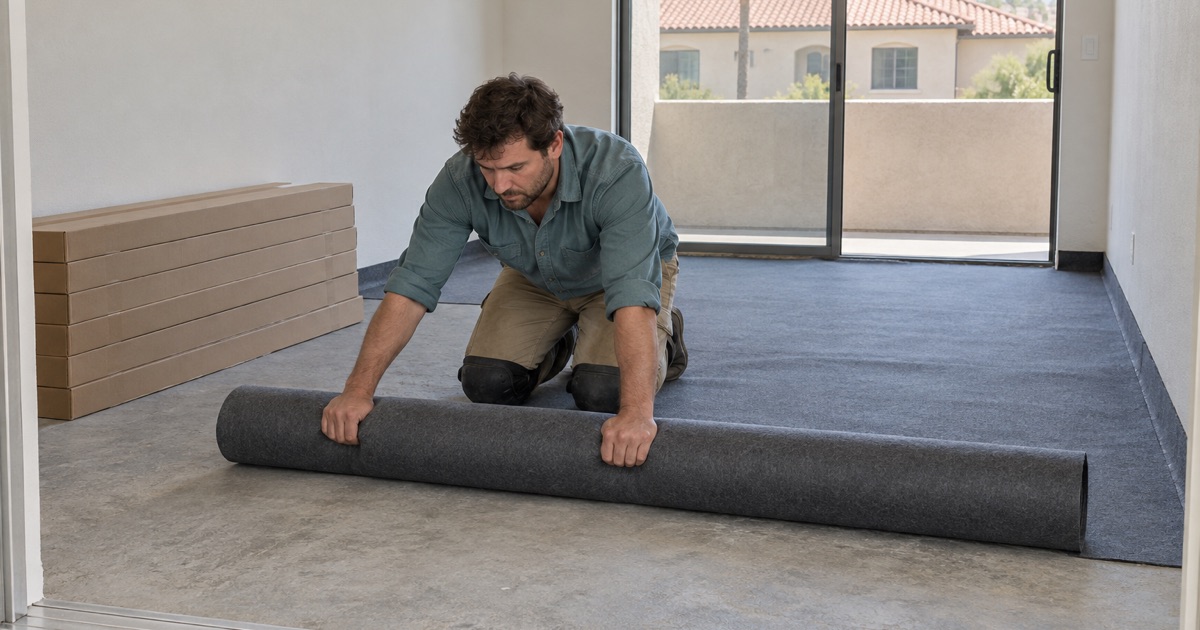
Worker unrolling acoustic underlayment across a concrete deck in an empty upstairs condominium unit in Alhambra before engineered oak planks go down.

Refinishing A Rental Floor Between Tenants

The time between a move-out and a move-in is often short, and a floor refinish can take up most of it. We schedule backward from the move-in date, choose a finish that cures in the time available, and hold the final coat until paint and cleaning are done. That keeps a rental from sitting empty while a floor waits its turn.

Normal Wear And Tear On Rental Hardwood Floors

Light scratches, a dulled finish in the traffic lanes and minor fading are generally treated as normal wear and tear from ordinary living. Deep gouges, large pet stains and water damage from neglect are a different matter and can bear on a security deposit deduction. We describe the condition in plain terms, so an owner has a clear written record of what the floor looked like.

Recording Floor Condition At Move-In And Move-Out

We photograph the floors before and after every rental turnover and note scratches, stains and finish condition room by room. When the next tenancy ends, that record makes it far easier to tell what changed during the lease and what was already there. It protects the owner and the tenant alike, because both are working from the same pictures.

Hard Flooring Rules In Condo And Townhome Associations

Many condo and townhome associations have their own rules for hard flooring, including required underlayment and sometimes approval before work starts. We ask for those rules and check the planned floor against them before any material is ordered. Finding a conflict after the flooring has been delivered costs money and time that a phone call up front would have saved.

Acoustic Underlayment In Stacked Units

In a building with units above and below, footfall noise travels through a hard floor far more than through carpet. Acoustic underlayment reduces that transfer, and associations often set their own performance requirements for impact and airborne sound. We match the underlayment to the association’s written requirement rather than to a general product claim, so the new floor does not become a complaint.

Refinishing One Unit While The Neighbors Stay Home

Working in a shared building means keeping dust, noise and odor inside the unit. We use contained, vacuum-connected sanding, keep work within the association’s permitted hours, protect common hallways and elevators when moving equipment, and choose compliant low-odor finishes. The goal is that the neighbors notice as little as possible, and the association hears nothing about us.

Durable Floors For Long-Term Rentals

A rental floor has to survive years of moves, furniture and varied care. A harder species, a lower sheen that hides scratches, and an engineered floor with a wear layer thick enough for future sanding all extend its life. Where hardwood is not the right fit, we will say so and explain the tradeoffs of other hard surfaces for that unit.

Owner Or HOA: Who Repairs A Damaged Floor

In most associations the owner is responsible for flooring inside the unit, while the association handles common areas and some building systems. When a leak from a common pipe or another unit damages a floor, the answer depends on the association’s own documents and the insurance policies involved. We document the damage and the repair scope so the owner, the HOA and the adjusters can sort out who pays.

Choosing, Installing And Paying For A Floor

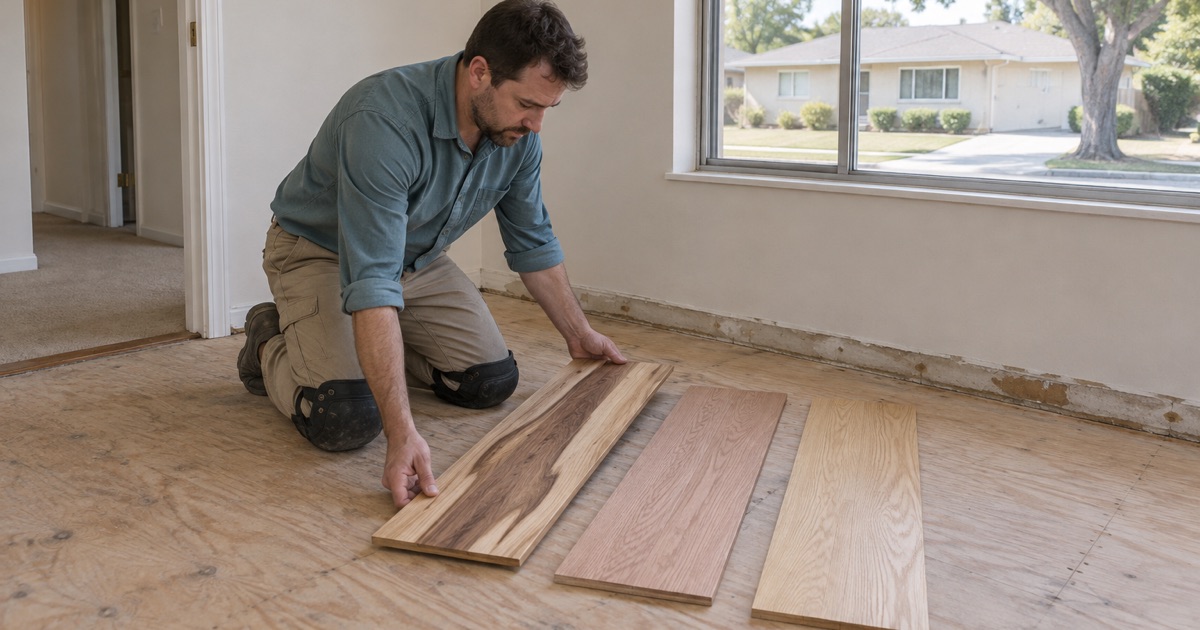
Worker laying hickory, white oak and red oak sample boards side by side on a bare subfloor in an Alhambra house so the owners can compare them in their own light.

Solid Or Engineered Hardwood Over A Raised Foundation Or Slab

Solid hardwood is usually nailed down over a plywood or board subfloor, which suits a raised foundation with a sound crawl space. On a slab-on-grade, engineered hardwood glued down or floated over a vapor retarder is usually the safer choice, because concrete can release moisture. We test the subfloor, including an in-situ relative humidity test on a slab where needed, before recommending either.

Engineered Wear Layer Thickness And Future Sanding

An engineered floor is a real wood veneer bonded to a plywood or composite core, and the thickness of that veneer decides its future. A thick wear layer can be fully sanded once or more, while a thin one may only take a screen and recoat. We measure before promising anything, so an engineered floor is never sanded through to its core.

Hardwood Versus Luxury Vinyl Plank For Busy Households

Hardwood can be sanded and refinished for decades, while luxury vinyl plank resists water and scratches but cannot be renewed once its wear layer is gone. Families with large dogs or wet entryways sometimes prefer vinyl in those areas and hardwood elsewhere. We lay out the tradeoffs honestly, including where we think hardwood is not the best choice.

Wide Plank, Herringbone And Chevron Installation Demands

Wide plank boards move more with seasonal changes, so they need careful acclimation, a flat subfloor and often glue-assisted fastening. Herringbone and chevron patterns need precise layout from a center line and a very flat substrate, since every error shows across the room. We check subfloor flatness before committing to any of these, and we flatten it first where needed.

Red Oak, White Oak And Hickory Under Daily Wear

Red oak has an open grain that hides wear and takes stain evenly, which is why so many older floors use it. White oak is slightly harder, has a tighter grain and handles modern gray and natural looks well. Hickory rates much harder on the Janka hardness scale and shows strong color variation, so it holds up to dogs and children but looks busier. We bring samples so you see each species on your own lighting.

What Changes Wood Floor Refinishing Cost Per Square Foot

The price of a refinish depends on more than the square footage. Deep damage that needs extra sanding, board replacement, stain versus a natural finish, the number of coats, the finish chemistry, furniture moving and lead-safe work practices all change the number. Our estimate lists each of these separately, so you can see exactly what drives your price.

Hardwood Stair Treads And Risers Priced By The Step

Each stair tread, riser and nosing is sanded or replaced by hand, and landings add their own work. Retrofit treads can cap worn stairs, and new treads can match a refinished floor below. We price stairs per step and per component, so you can choose to refinish some parts and replace others, and see what each choice costs.

Insurance Coverage For Water Or Smoke Damaged Floors

Whether homeowners insurance pays for a damaged floor depends on your policy and on how the damage happened, and many policies treat a sudden burst differently from a slow leak. We do not decide coverage, but we give your adjuster what they ask for: photos, moisture readings and a repair scope written as matching boards and finish rather than a visible patch.

Areas We Serve

Alhambra Wood Flooring provides wood-flooring throughout the greater Alhambra area, with the same crews and the same standards on every job.

Good to know

Frequently Asked Questions

How long does a hardwood floor refinish take from start to finish?

Most of the time goes into drying and curing rather than sanding. A single room can often be sanded and coated over a few working days, while a whole house moves room by room so you keep part of the home usable. Your written schedule shows the sanding days, each coat, and the day furniture can return, so nothing about the timeline is left to guesswork.

Do you give a written estimate before any work starts?

Yes. The estimate comes after we have measured the rooms, taken moisture readings, checked the wear layer on an engineered floor and, on a raised floor, looked at the framing underneath. It separates open floor from stairs, lists repairs as their own line items, and names the finish system, so you can compare it against another quote line by line.

Can you match new boards to an old oak floor?

Usually, yes. We identify the species, board width, thickness and cut, then source boards to match and weave them in with staggered joints rather than a straight patch line. The whole room is then sanded and finished together, which is what makes the repair disappear. Very old or unusual floors can take longer to source, and we tell you that before the work is scheduled.

Is dustless sanding really dust free?

No sanding job is completely free of dust, and we will not promise that. Our sanders run connected to vacuum extraction, the work area is sealed off from the rest of the house, and we clean between grits. The result is far less airborne dust than open-bag sanding, but you should still expect the work rooms to be closed while we are in them.

What should I do with pets while floors are being refinished?

Keep them out of the work area entirely until the final coat has cured enough to take claws. Fresh finish marks easily, and pet hair settling into a wet coat has to be sanded out. Your room-by-room schedule shows the day each area is safe for pets again, which is usually later than the day it is safe for socks.

Can you work on a floor that has termite damage?

We can repair the wood once the termite question is settled, but we do not treat termites ourselves. When we find kick-out holes or frass, we tell you before any board is replaced so a licensed pest control operator can inspect and treat. Replacing boards over an active colony only feeds it new wood, so the repair waits for the treatment.

Do you refinish engineered hardwood as well as solid wood?

Yes, when the wear layer allows it. We pull a vent cover or a transition to measure the veneer, then tell you whether the floor can take a full sand, only a screen and recoat, or neither. Thin veneers are common, and promising a full sand without measuring is how a floor ends up sanded through to its plywood core.

Can you refinish stairs and floors in the same project?

Yes, and it usually makes sense to, because the stairs and the landing then share one stain color and one finish. Stairs are hand work, done with detail sanders and scrapers, so they are quoted separately by the tread, riser and nosing. That keeps the price for your open floor clear and shows exactly what the stair portion costs.

Will you work around tenants or a move-in date?

Yes. For rental turnovers we plan the work backward from the move-in date so the final coat has time to cure before furniture and boxes arrive. We photograph the floor condition before the work and after it, which gives an owner a clear record for the next tenancy and helps separate normal wear from damage later.

Which finish do you recommend for a busy household?

It depends on how the floor is used and how you want it to look. Waterborne polyurethane dries clear and cures quickly, oil-modified polyurethane gives a warmer amber tone, and hardwax oil is easy to spot-repair but needs more regular maintenance. We walk through samples on your own boards and only offer products that meet the South Coast air district limit.

Ready to Get Started?

Request a free quote today and we'll get back to you fast.